Why Edge Treatment Matters So Much
When buying a BBQ grill grate, most buyers focus on material and mesh shape — but overlook one critical detail: edge treatment. Edge treatment determines whether a grill grate will last one month or one year. It affects strength, safety, cleaning, and overall lifespan. There are three common methods on the market: TIG welding, spot welding, and edge wrapping. This comparison breaks down the differences so importers and distributors can choose the most durable option for their market.
The edge is where a grill grate fails first:
- Frequent handling: lifting, flipping, and scrubbing put the most stress on the edge
- Heat cycling: repeated expansion and contraction weakens welds over time
- Cleaning impact: steel wool and sink knocks cause burrs and weld failure
- Food safety: loose weld spots can fall into food; sharp edges can cut hands
In short, edge treatment directly determines whether your grate is a short-term consumable or a long-term investment.
The Three Edge Treatment Methods Explained
1. TIG Welding (Full-Seam Welding)
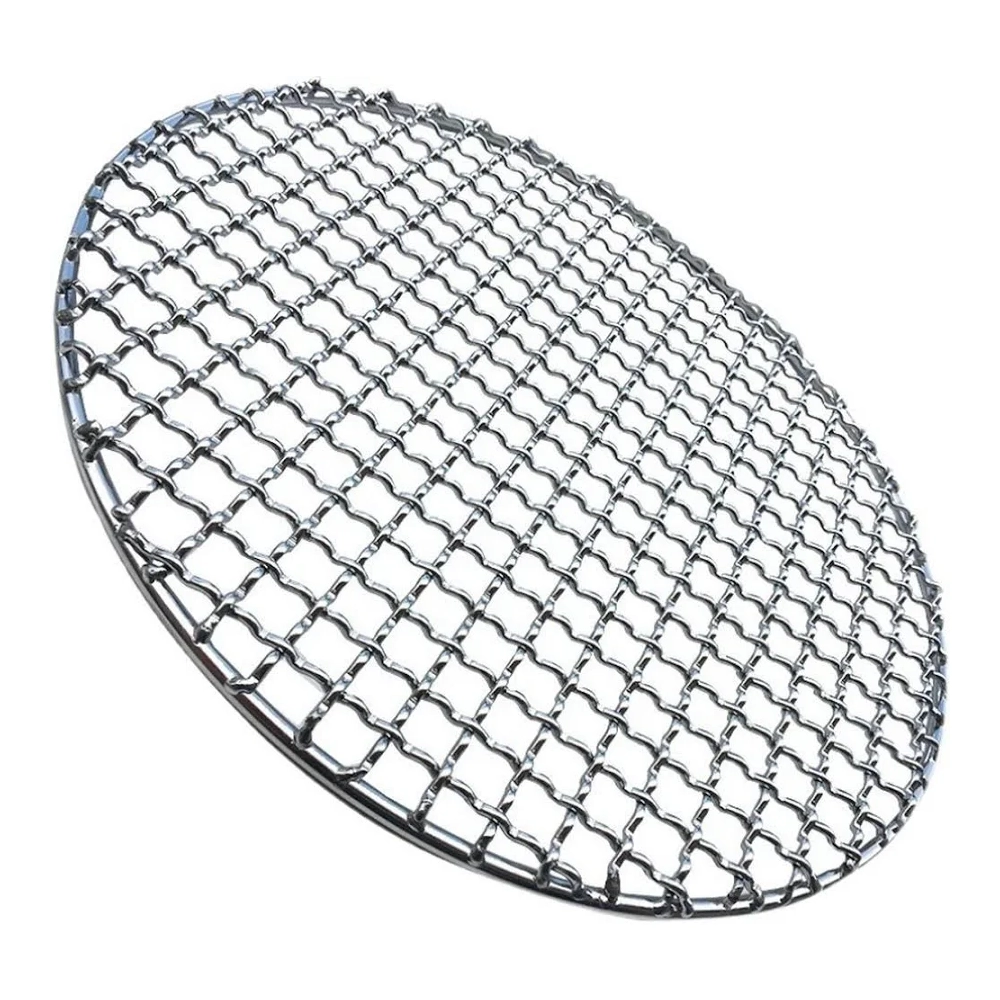
How it works: An electric arc is created under argon gas shielding, continuously melting and fusing the wire to the frame (or wires to each other), forming a complete seam.
Pros:
- Highest strength: full, continuous weld bead
- Sealed joint: does not trap grease or food residue
- Excellent heat-cycling resistance: will not crack easily
- Smooth edge: rounded and burr-free
Cons:
- Higher cost: more labor input and a higher unit price
- Appearance: slight discoloration if not polished
- Longer lead time: lower production efficiency
Best for: commercial BBQ restaurants, high-frequency use, maximum durability requirements. Durability rating: ⭐⭐⭐⭐⭐
2. Spot Welding (Resistance Welding)
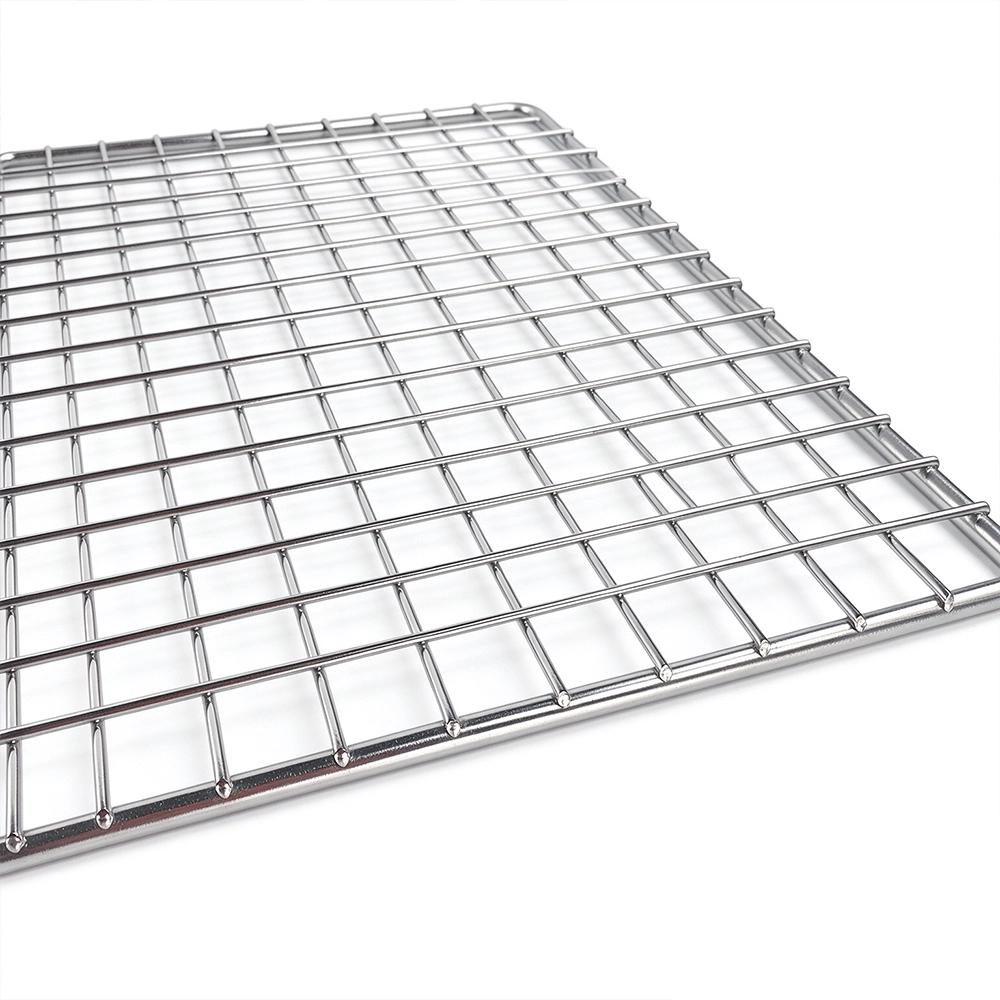
How it works: Electric current passes through contact points, generating resistance heat that presses and fuses the wire to the frame. The weld spots are separate and intermittent.
Pros:
- High efficiency: fast production and low cost
- Scalable: suitable for large-scale standardized production
- Flat surface: relatively level profile
Cons:
- Limited weld strength: spots can break under repeated stress
- Residue traps: gaps between spots collect oil and food residue
- Heat-cycling risk: weld spots crack under frequent temperature changes
- Burr risk: low-cost products often carry sharp burrs
Best for: low-frequency household use, short-term or disposable applications. Durability rating: ⭐⭐⭐
3. Edge Wrapping (Folded Edge / Binding)
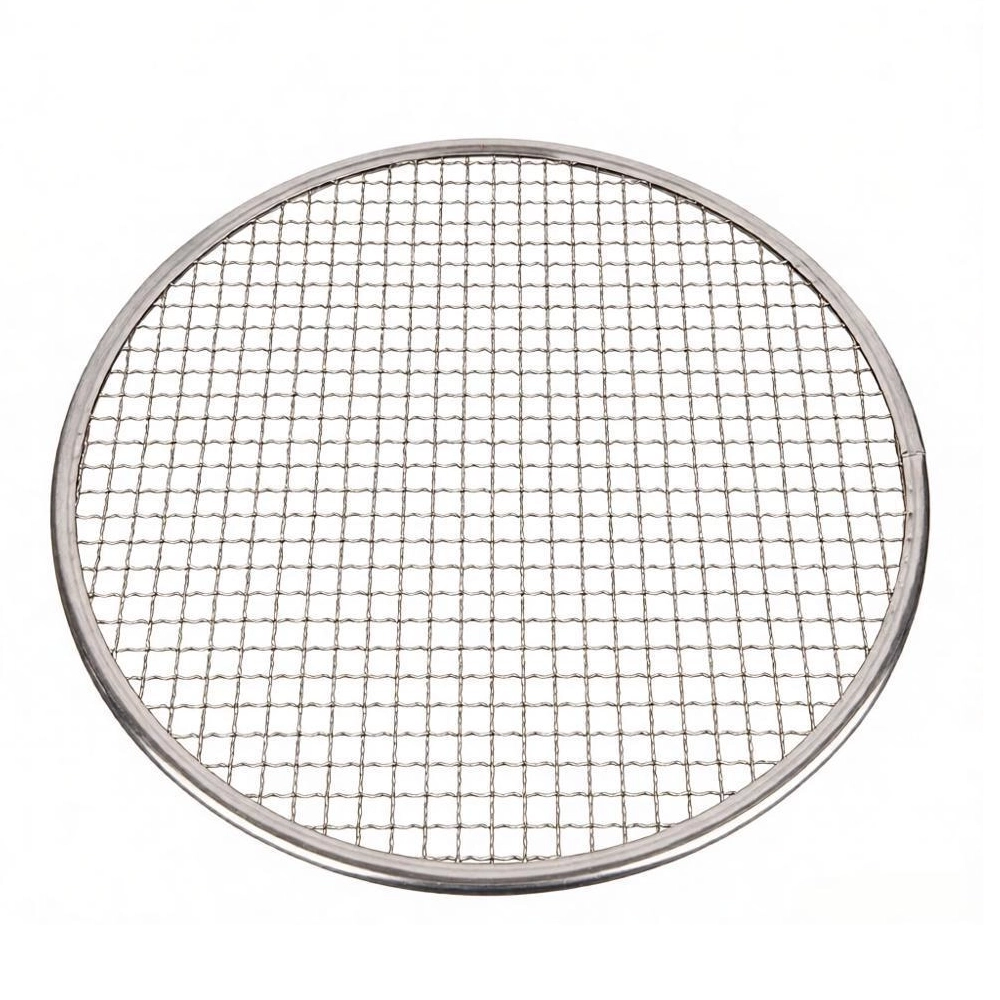
How it works: A metal frame (usually aluminum or stainless steel strip) wraps around the mesh edge and is folded and pressed tight — no welding required.
Pros:
- Burr-free: the smoothest edge of all three methods
- Premium look: clean appearance and strong shelf appeal
- Good rigidity: tight mesh-to-frame bond
- No weld failure: no weld spots at all
Cons:
- Gap risk: poorly made wraps trap water and residue
- Galvanic corrosion: possible when wrap and mesh materials differ
- Deformation: the wrap can loosen after heavy drops
- Medium-to-high cost
Best for: mid-to-high-end household use and display-type commercial grills where feel and appearance matter. Durability rating: ⭐⭐⭐⭐
Side-By-Side Comparison
| Criteria | TIG Welding | Spot Welding | Edge Wrapping |
|---|---|---|---|
| Joint strength | Highest | Moderate | High |
| Heat cycling resistance | Excellent | Poor | Good |
| Weld failure risk | Low | High | None (no welds) |
| Residue trapping | Low | High | Moderate |
| Edge feel (burr-free) | Good | Moderate | Excellent |
| Production efficiency | Low | High | Medium |
| Cost | High | Low | Medium-High |
| Best for | Commercial high-frequency | Household low-frequency | Mid-to-high-end household |
| Durability | ⭐⭐⭐⭐⭐ | ⭐⭐⭐ | ⭐⭐⭐⭐ |
How To Check Edge Quality Before You Buy
Before placing a bulk order, run these quick hands-on checks on pre-production samples:
- Feel the edge: run your finger along it — if it catches, it fails
- Inspect the weld: spot welds should be even and burr-free; TIG seams should be continuous, full, and free of pinholes
- Flex the edge: gently bend the edge wire — spot welds may shift, TIG welds should not
- Check the gap: wrapped edges should have no visible gap, or they will trap residue
- Ask about materials: frame and mesh should be the same material — if not, watch for galvanic corrosion
Buying Recommendations
Match the edge treatment to your target market and price point:
- Restaurant / high-frequency use: choose TIG welding — higher upfront cost, lower long-term replacement cost
- Occasional home grilling: spot welding is sufficient — but select full, burr-free weld spots
- Feel and appearance priority: choose edge wrapping — but inspect the gap and material consistency
- Maximum durability, budget allows: TIG welding plus polishing is currently the most durable combination
About Us
We are a professional BBQ grill grate manufacturer with 10 years of experience. We offer TIG welding, spot welding, and edge wrapping customization, with material options including 304/201/316 stainless steel. Sizes, mesh patterns, and shapes can all be customized.
Wholesale inquiries, free samples, and custom quotes are available for importers and distributors worldwide.
View Customization Options